Prana & Pranayama
- Jason Baldauf
- Aug 2, 2024
- 4 min read

Updated: Oct 6, 2024
Sutra 2:52 "Through the control of prana, the veil covering the Inner Light is destroyed.."
- The Yoga Sutras of Patanjali
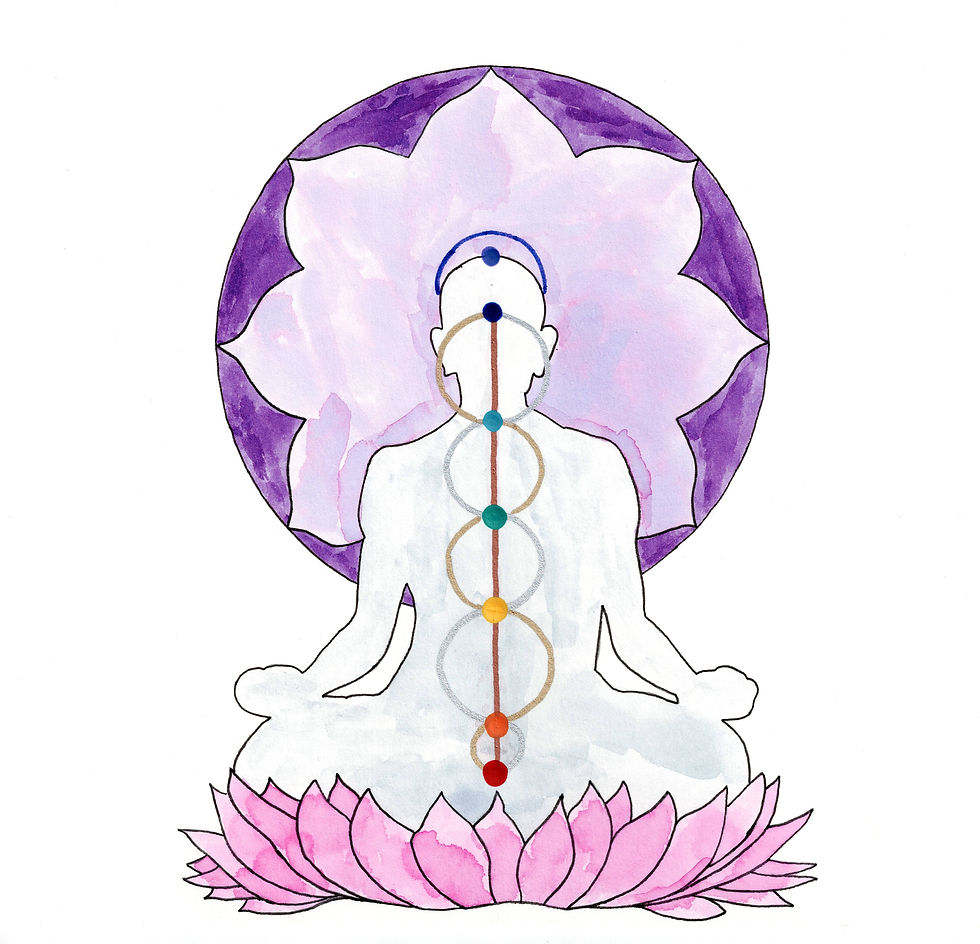
Prana is a fundamental concept in Vedic philosophy and yogic traditions, representing the vital life force or energy that sustains all living beings. It is the invisible energy that flows through all matter and is responsible for the vitality and life in the universe. In the human body, prana flows through a network of energy channels called nadis, with three primary nadis being the Ida, Pingala, and Sushumna. The chakras are energy vortices where these nadis intersect, store and regulate the flow of prana throughout the body.
Pranayama is the practice of controlling the breath, which in turn regulates the flow of prana within the body. The term "pranayama" is derived from the Sanskrit words "prana" (life force) and "ayama" (control or extension). Pranayama involves various techniques of breathing exercises designed to purify the nadis, balance the chakras, and enhance the flow of prana.
Pranayama is an ancient practice known in India for 4,000 years that has its roots in the Vedic texts and has been elaborated in detail in later yogic texts such as the Yoga Sutras of Patanjali and the Hatha Yoga Pradipika. It was developed as a means to achieve higher states of consciousness, physical health, and spiritual awakening. The sages of ancient India recognized the close relationship between breath, mind, and prana and developed pranayama as a tool for harnessing this relationship.
Pranayama is vital for several reasons and has the following effects:
Physical Health: Enhances lung capacity, improves cardiovascular health, and strengthens the respiratory system.
Mental Clarity: Reduces stress, anxiety, and depression; promotes mental focus and clarity.
Energy Balance: Balances the flow of prana, harmonizes the chakras, and purifies the nadis.
Spiritual Growth: Facilitates meditation, enhances awareness, and promotes spiritual awakening.
To practice pranayama, pick a quiet, clean place, preferably early in the morning on an empty stomach. Sit in a comfortable, position with a straight spine, such as Sukhasana (Easy Pose) or Padmasana (Lotus Pose). Focus on the breath, making each inhalation and exhalation smooth and controlled. Start with simpler techniques and gradually move to more advanced practices.
There are several types of pranayama, each with specific techniques and benefits:
Nadi Shodhana (Alternate Nostril Breathing): Balances the nadis, calms the mind, and promotes overall health.
Close the right nostril with the right thumb.
Inhale slowly through the left nostril.
Close the left nostril with the ring finger, release the thumb, and exhale through the right nostril.
Inhale through the right nostril, close it with the thumb, and exhale through the left nostril.
This completes one cycle. Repeat for 5-10 minutes.
Kapalabhati (Skull Shining Breath): A cleansing technique that invigorates the mind, strengthens the lungs, and purifies the respiratory system.
Take a deep breath in, then exhale forcefully through the nose, contracting the abdominal muscles.
Passive inhalation follows each forceful exhalation.
Perform 20-30 cycles, rest, and repeat for 3 rounds.
Bhastrika (Bellows Breath): Energizes the body, increases the flow of prana, and enhances mental clarity.
Inhale deeply through both nostrils, expanding the abdomen and chest.
Exhale forcefully and quickly through both nostrils, contracting the abdominal muscles.
Both inhalation and exhalation should be active and forceful, resembling the bellows of a blacksmith.
Perform 20-30 cycles (one cycle is one inhalation and one exhalation), repeat for 2-3 rounds.
Ujjayi (Victorious Breath): Creates heat in the body, calms the mind, and is often used during asana practice.
Constrict the back of your throat slightly, as if you are fogging a mirror with your breath, but keep your mouth closed.
Inhale deeply and slowly through both nostrils, creating a soft, whispering sound (like the ocean).
Exhale slowly through both nostrils, maintaining the same throat constriction and sound.
Continue this controlled breathing for 5-10 minutes.
Bhramari (Bee Breath): Reduces stress and anxiety, promotes mental peace, and improves concentration.
Close the eyes and ears using the index fingers.
Inhale deeply, and while exhaling, produce a humming sound like a bee.
Focus on the vibration in the head.
Repeat 5-7 times.
Surya Bhedana (Right Nostril Breathing): Increases vitality and body heat, stimulates the sympathetic nervous system.
Close the left nostril with the ring finger of the right hand.
Inhale deeply and slowly through the right nostril.
Close the right nostril with the thumb of the right hand.
Exhale slowly through the left nostril.
Continue this breathing pattern for 5-10 minutes.
Chandra Bhedana (Left Nostril Breathing): Calms the nervous system, cools the body, and is beneficial for reducing stress.
Close the right nostril with the thumb of the right hand.
Inhale deeply and slowly through the left nostril.
Close the left nostril with the ring finger of the right hand.
Exhale slowly through the right nostril.
Continue this breathing pattern for 5-10 minutes.
Practicing these pranayama techniques can significantly impact your physical, mental, and spiritual well-being. Regular practice helps balance the body's energy systems, reduce stress, and enhance overall health. Always listen to your body and practice within your comfort zone, gradually increasing the duration and intensity as you become more comfortable with the techniques.


Comments